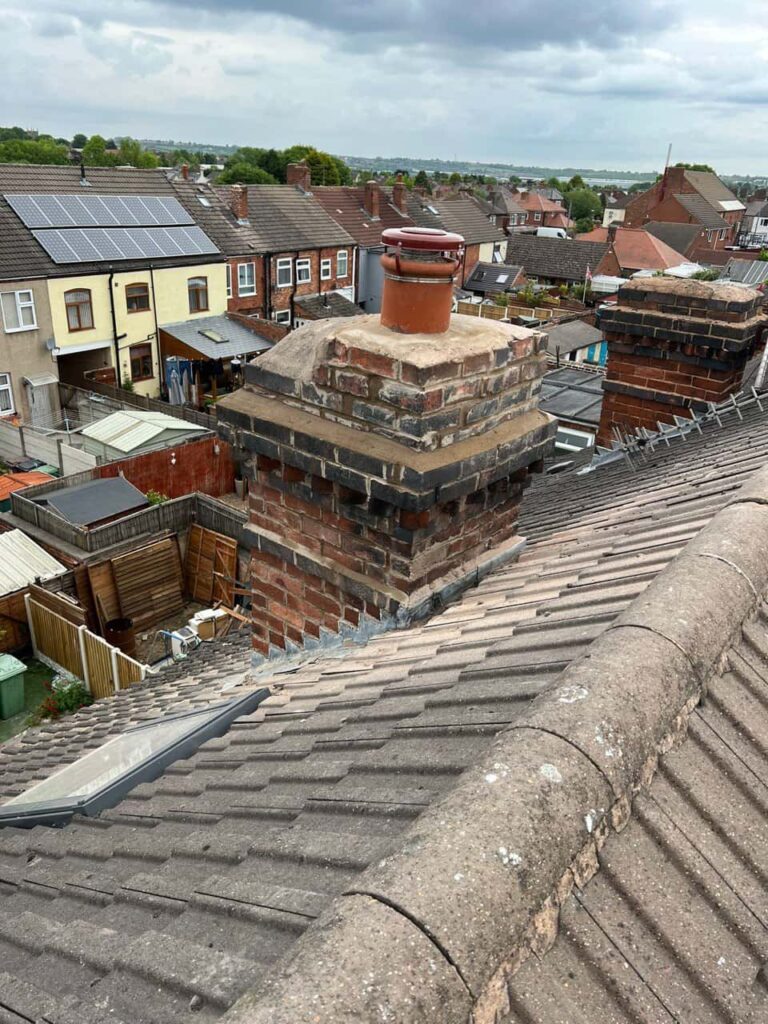
If your roof continues to leak despite previous repairs, the problem may not be with the roof tiles themselves. Damaged lead flashing is another possible cause, particularly where the roof meets a chimney, wall or other structure. When flashing becomes cracked, loose or poorly sealed, rainwater can find its way beneath the roof covering and enter the property.
For homeowners in Haddenham, Cambridgeshire, understanding the role of lead flashing can help identify why a leak keeps returning. Addressing the underlying fault is important for protecting the roof structure and preventing further water damage.
What Is Lead Flashing and Why Is It Important?
Lead flashing is a weatherproofing material used to seal joints and vulnerable points on a roof. It is commonly found around chimneys, roof abutments, valleys and other areas where different surfaces meet.
Roof tiles and slates provide the main protective covering, but they cannot seal every joint on their own. Flashing helps direct rainwater away from these vulnerable areas and prevents it from entering gaps beneath the roofing materials.
Lead is widely used because it is durable, flexible and can accommodate some movement in the roof structure. However, it is not immune to damage. Poor installation, repeated movement, weather exposure or deterioration of the surrounding materials can eventually compromise its effectiveness.
How Damaged Lead Flashing Causes Roof Leaks
When lead flashing is in good condition, it helps water flow safely away from roof joints. If it becomes damaged, water may pass behind the flashing or beneath adjacent tiles.
Several problems can cause this to happen:
- Cracks or splits: Lead can develop splits through repeated movement, fatigue or incorrect installation, creating an opening for rainwater.
- Loose flashing: If flashing pulls away from a wall or chimney, the gap can allow water to enter behind it.
- Failed joints: Flashing sections need to overlap and connect correctly. Poorly formed or deteriorated joints can become vulnerable to water penetration.
- Damaged mortar or seals: Where flashing is secured into masonry, deteriorated mortar can allow the flashing to loosen and create gaps.
- Incorrect installation: Flashing that has not been fitted with suitable overlaps, fixings or detailing may fail to direct water away effectively.
Even a small defect can cause recurring leaks during prolonged rainfall or when wind drives rain against the roof.
Signs That Lead Flashing May Be Causing the Leak
Water entering through damaged flashing does not always appear directly beneath the affected area. It can travel along roof timbers or other surfaces before becoming visible indoors.
Common warning signs include damp patches near chimney breasts, water staining on ceilings close to external walls, peeling paint around the upper parts of rooms and leaks that become worse during heavy rain.
You may also notice loose or lifted lead around a chimney or a visible gap where the flashing meets masonry. However, flashing defects are not always easy to identify from the ground, and similar symptoms can be caused by damaged tiles, defective roof valleys or other roofing problems.
If a leak keeps returning after repairs, it is worth having the surrounding roof junctions inspected rather than assuming the original repair simply needs repeating.
Why Repeated Roof Leak Repairs May Not Solve the Problem
A recurring leak often indicates that the source of the water has not been fully identified or that another defect remains nearby. For example, replacing a broken roof tile may not resolve a leak if water is actually entering through a split in the flashing beside a chimney.
Likewise, applying a surface sealant over damaged lead may only provide a temporary improvement if the underlying problem involves movement, loose fixing points or failed joints.
A proper inspection should assess the flashing, adjacent roofing materials and the condition of the surrounding masonry. This helps establish whether the lead can be repaired, needs to be refitted or should be replaced.
The appropriate solution depends on the extent of the damage. Localised defects may be repairable, while extensive splitting or widespread deterioration may require more substantial work.
How Professional Lead Flashing Repairs Help
Effective flashing repairs begin with identifying the entry point and understanding why the damage occurred. A roofer can examine the affected junction, check nearby tiles and inspect the flashing’s connection to the masonry.
Depending on the findings, the work may involve securing loose sections, repairing suitable localised damage, renewing defective joints or replacing sections that can no longer provide reliable protection.
Careful workmanship is essential because flashing needs to fit correctly around roof features and direct water away from vulnerable joints. Simply covering a visible gap without addressing the surrounding defects may leave the roof at risk of further leaks.
For properties in Haddenham, Cambridgeshire, arranging an assessment when water ingress first appears can help prevent continued moisture exposure and further deterioration of the roof and interior finishes.
Conclusion
Damaged lead flashing could be the reason your roof keeps leaking, particularly if water is entering around a chimney, wall or roof junction. Cracks, loose sections and failed joints can allow rainwater beneath the roofing materials, even when the tiles themselves appear to be in good condition.
If your roof has developed a recurring leak, Haddenham Roofing Repairs can help identify the cause and recommend suitable repairs. Contact us to arrange a roofing inspection and address the problem before further damage develops.
Call us on: 01844 396 698
Click here to find out more about Haddenham Roofing Repairs
Click here to complete our contact form and see how we can help with your roofing needs.