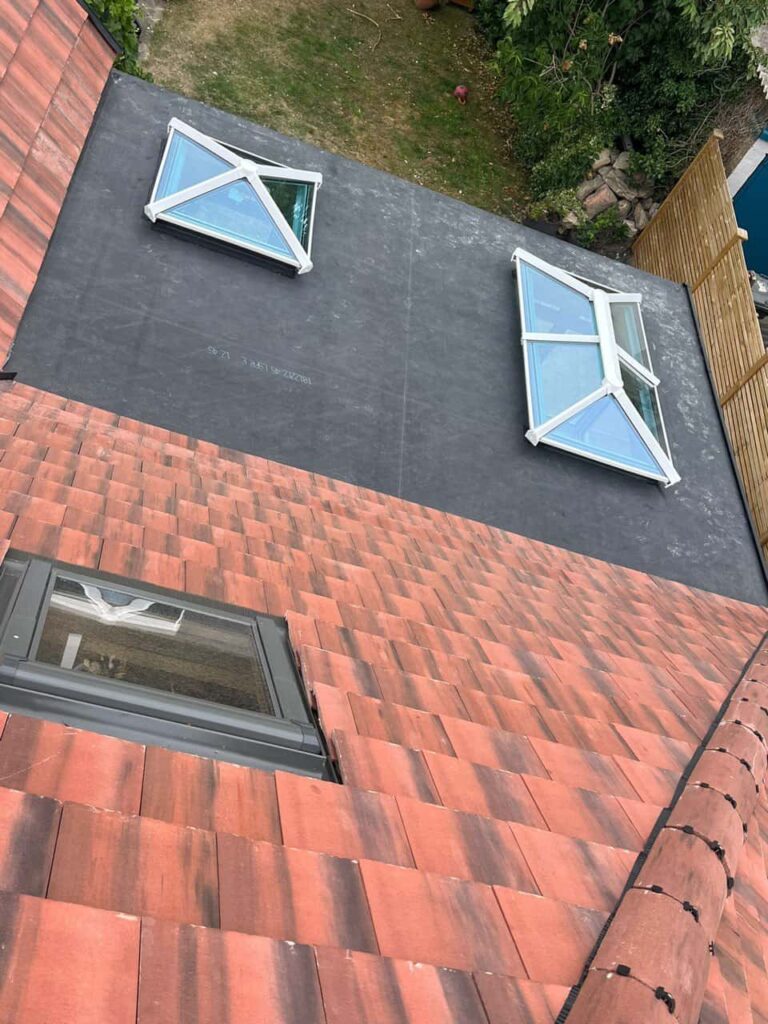
A slipped roof tile may seem like a minor issue, particularly if only one or two tiles appear out of place. However, tile slippage is often a sign that the roofing system has begun to weaken. For homeowners in Haddenham, Cambridgeshire, understanding what tile movement really indicates can help prevent more serious structural problems.
At Haddenham Roofing Repairs, we regularly inspect and repair roofs affected by tile displacement, ensuring small issues are resolved before they escalate.
Why Do Roof Tiles Slip?
Tiles are designed to overlap securely and form a continuous weather-resistant layer. When one moves, it usually means something beneath the surface has changed.
Deteriorating Fixings
Older roofs often rely on nails or clips to secure tiles to timber battens. Over time, these fixings can corrode or loosen, reducing their holding strength. Once a fixing fails, the tile may gradually slip down the roof slope.
Batten Weakening
Tiles sit on horizontal timber battens. If moisture has affected these battens, they may soften or weaken. When battens no longer provide firm support, tiles can shift.
Mortar Breakdown
On older roofs, ridge and verge tiles are often bedded in mortar. As mortar ages, it can crack and crumble, allowing tiles to move more freely during wind exposure.
What Tile Slippage Indicates
Tile movement is rarely isolated. It often signals broader wear within the roofing system.
Compromised Weather Protection
When a tile slips, it can expose the underlay beneath. Although the underlay provides secondary protection, it is not designed to withstand prolonged exposure to rainfall.
This increases the risk of:
- Water ingress
- Internal damp patches
- Timber deterioration
Increased Wind Vulnerability
A displaced tile creates a weak point. Wind can catch the exposed edge and dislodge additional tiles, leading to further instability.
In Haddenham, Cambridgeshire, where roofs must withstand seasonal weather changes, even minor displacement can quickly worsen if left unaddressed.
Hidden Structural Stress
Tile slippage may also reflect structural movement within the roof.
If multiple tiles are slipping in a particular area, this could indicate:
- Batten misalignment
- Subtle roof sagging
- Uneven load distribution
Professional inspection helps determine whether the issue is localised or more widespread.
The Risks of Ignoring Slipped Tiles
Leaving slipped tiles untreated can lead to:
- Water penetration into the loft space
- Damage to insulation
- Rot within timber components
- Internal ceiling staining
What begins as a small visible issue can gradually compromise the roof’s overall performance.
Professional Repair and Assessment
Repairing tile slippage involves more than repositioning the tile. A thorough assessment should identify the underlying cause.
Professional solutions may include:
- Replacing corroded fixings
- Renewing weakened battens
- Re-bedding ridge or verge tiles
- Installing improved fixing systems
At Haddenham Roofing Repairs, we ensure that the source of the problem is addressed to restore long-term stability.
Conclusion
Tile slippage is not just a cosmetic concern. It often signals ageing fixings, weakened battens or mortar deterioration, all of which can reduce your roof’s ability to protect your home.
For homeowners in Haddenham, Cambridgeshire, early intervention is essential. Haddenham Roofing Repairs provides professional inspection and repair services to secure slipped tiles and safeguard the integrity of your roof. Contact our team to ensure your roofing system remains stable, weather-resistant and built to last.
Call us on: 01844 396 698
Click here to find out more about Haddenham Roofing Repairs
Click here to complete our contact form and see how we can help with your roofing needs.